Bank of America is the second largest bank in the US. Their credit card statements have a distinctive look - maroon headers, dotted leader lines, and a layout that packs a lot of information onto every page.

Credit card statements are a different beast from checking account statements. More fields, more sections, more things that can confuse a parser. Bank of America's are a good example of why.
The Two-Column Summary
Page one hits you with two dense sections side by side:
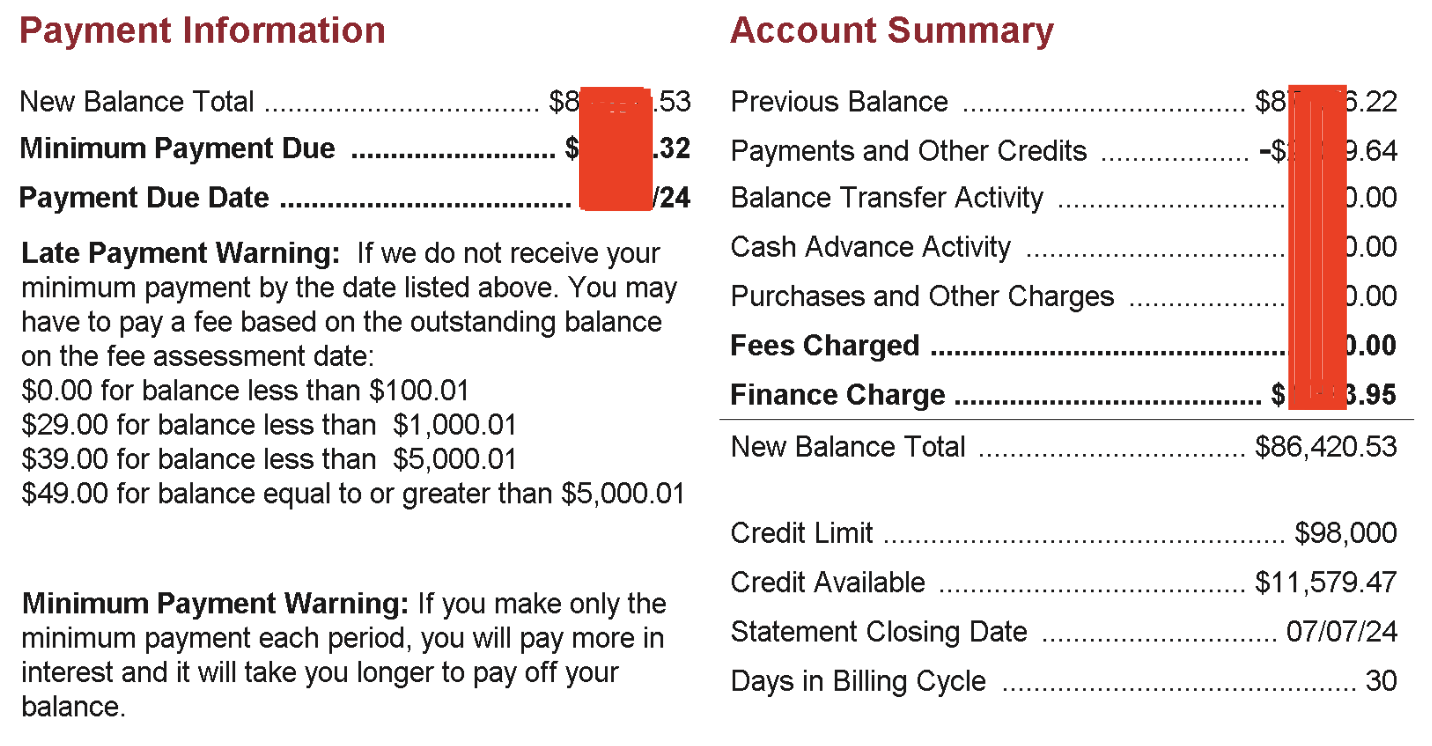
On the left: Payment Information. New Balance Total, Minimum Payment Due, Payment Due Date, and a Late Payment Warning with tiered fee amounts. On the right: Account Summary. Previous Balance, Payments and Other Credits, Balance Transfer Activity, Cash Advance Activity, Purchases and Other Charges, Fees Charged, Finance Charge, New Balance Total. Plus Credit Limit, Credit Available, Statement Closing Date, and Days in Billing Cycle.
That's over a dozen fields packed into a two-column layout with dotted leaders connecting labels to values. For a human, the dots guide your eye across. For a parser, two-column layouts are notoriously hard. The text from the left column and the right column can interleave when extracted, jumbling Payment Information fields with Account Summary fields. You need to understand the spatial layout of the page, not just read the text top to bottom.
And notice the Late Payment Warning on the left - "$0.00 for balance less than $100.01", "$29.00 for balance less than $1,000.01". Those are dollar amounts that aren't transactions and aren't balances. They're conditional fee schedules printed right there in the summary area.
Are Those Debits or Credits?
The transaction table looks straightforward enough:

Posting Date. Transaction Date. Description. Reference Number. Amount. Five columns.
But look at that Amount column. Just "Amount." Not "Debit" and "Credit." Not "Charges" and "Payments." One single column for everything. A purchase of $50 and a payment of $200 both appear in the same column. How do you tell them apart?
Bank of America uses a negative sign for credits - payments show as negative amounts. But if your parser strips the minus sign, or interprets it as a formatting artifact, every payment looks like a charge. On a credit card statement with thousands of dollars in both purchases and payments, getting the sign wrong means your totals will be wildly off.
Then there's the two date columns. Posting Date is when the transaction hit your account. Transaction Date is when you actually made the purchase. They can be different - sometimes days apart. Which one do you use for your export? Most people want the transaction date, but some accounting workflows need the posting date. A good parser needs to preserve both.
A Dispute Form in Your Statement
This one is genuinely unusual. Near the end of the statement, Bank of America includes this:
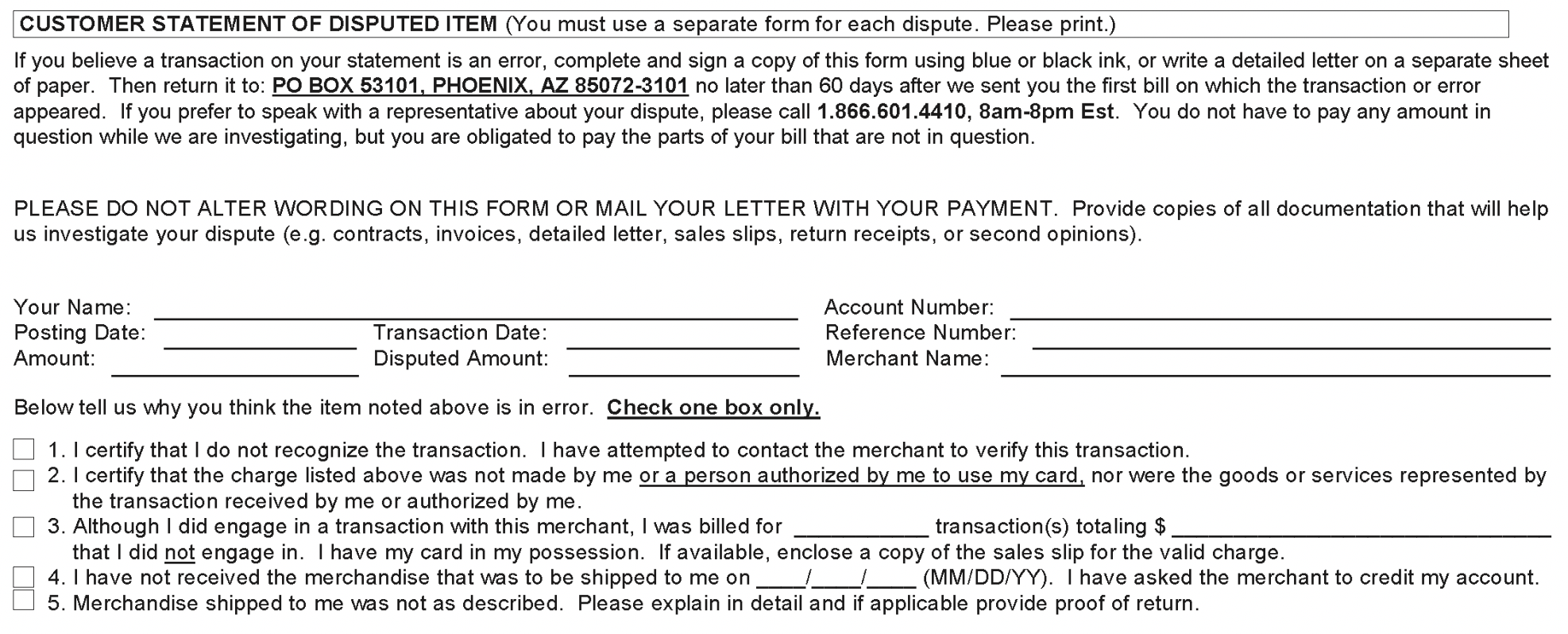
"CUSTOMER STATEMENT OF DISPUTED ITEM." It's a full dispute form - with checkboxes, blank lines to fill in, a mailing address, and numbered options like "I certify that the charge listed above was not made by me."
This is a paper form designed to be printed, filled out by hand, and mailed back. It's on the statement PDF. A parser scanning every page for financial data will hit this and find field labels like "Amount:", "Posting Date:", "Transaction Date:" - the exact same words used in the actual transaction table. Without knowing this page is a form template, a parser could try to extract these as transaction data.
Finance Charges and APR Tables
The final pages include interest rate information:
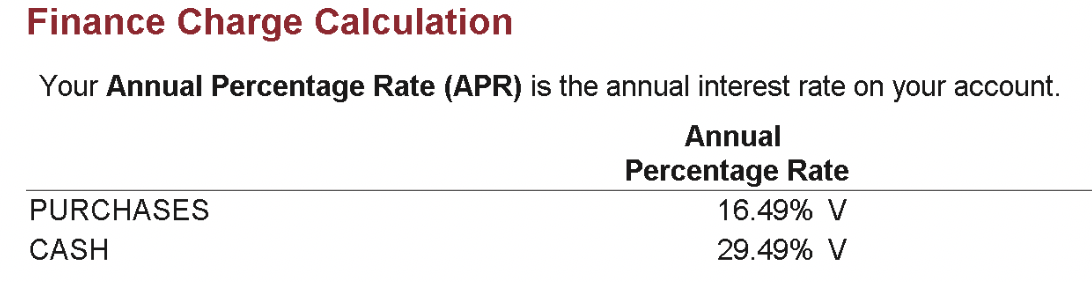
"Finance Charge Calculation." Annual Percentage Rates for Purchases (16.49% V) and Cash (29.49% V). The "V" means variable rate.
More structured data that isn't transactions. More tables with numbers and labels that a generic extraction tool will try to process. And that "V" suffix after the percentages is similar to HSBC's "D" suffix for overdrafts - a single letter that changes the meaning of the number, and that most parsers will either ignore or misinterpret.
Credit Cards Are Harder
Checking account statements are relatively simple - money in, money out, running balance. Credit card statements add layers of complexity. Payment due dates, minimum payments, credit limits, APR calculations, finance charges, dispute procedures. All of this lives alongside your transactions in the same PDF.
Bank of America's format packs all of these into a dense, two-column layout with a single ambiguous Amount column and pages of non-transaction content. Parsing it correctly means understanding the full structure of a credit card statement - not just finding a table and extracting rows.
Got a Bank of America Statement?
We handle the quirks so you don't have to. First conversion free.
Convert a Statement